Physical Address
304 North Cardinal St.
Dorchester Center, MA 02124
Physical Address
304 North Cardinal St.
Dorchester Center, MA 02124



Key Takeaways
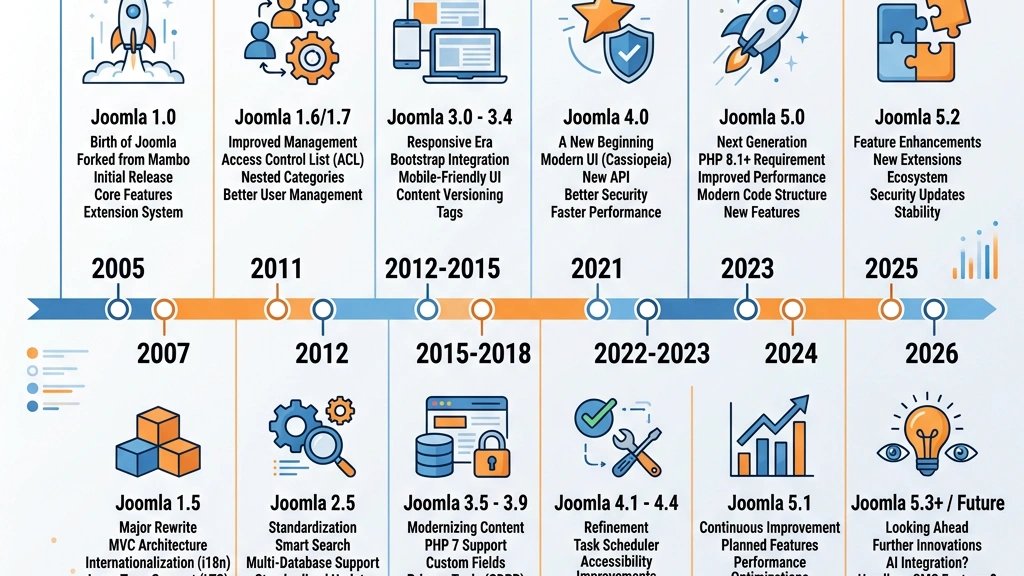
• Joomla’s evolution began with a fork from Mambo in 2005, leading to a series of major releases that introduced new features, security improvements, and a shift toward a more modern architecture.
• The 1.x and 2.x generations focused on stabilizing the core and adding Access Control Lists, while the 3.x era established Joomla as a mainstream CMS with rapid development cycles and GDPR compliance tools.
• Joomla 4 marked a complete rewrite, adopting modern PHP standards and a new release cadence. Joomla 5 built on this foundation with enhanced performance and a new component architecture, and Joomla 6 continues the trajectory toward a modular, future‑proof platform.
• Understanding the version timeline, end‑of‑life dates, and upgrade paths is essential for maintaining security, taking advantage of new features, and ensuring long‑term sustainability of Joomla sites.
In August 2005, a group of developers identified critical limitations in Mambo, the then‑popular open‑source CMS. Disagreements over governance, licensing, and the direction of development led to a fork that would become Joomla. The community sought a more collaborative environment, a clearer roadmap, and a focus on extensibility. By re‑branding Mambo 4.5.2.3 as Joomla 1.0, the founders established a new identity that emphasized openness and rapid innovation.
The fork was not merely a technical split; it represented a cultural shift. As documented on Wikipedia’s Joomla article, the event reshaped the open‑source CMS landscape. Developers were invited to contribute to a governance model that encouraged transparency and shared decision‑making. This inclusive approach quickly attracted a growing base of contributors who brought best practices from a wide range of software projects.
The early days of Joomla were marked by a sense of purpose: to create a CMS that was both powerful for developers and accessible for site owners. This mission set the stage for the subsequent releases that would define Joomla’s reputation as a flexible, community‑driven platform. If you are new to the project, our article on What Is Joomla? Everything You Need to Know provides a solid starting point.
Joomla 1.0 launched on September 22, 2005, and it was the first release to carry the Joomla brand officially. It included a clean installation wizard, a new template system, and a solid set of extensions that allowed users to customize their sites without deep technical knowledge. The core was built on PHP 4, which was the standard at the time, and it introduced a modular architecture that made adding new features straightforward.
One of the standout features of Joomla 1.0 was its emphasis on multilingual support. The platform provided built‑in tools for managing content in multiple languages, a capability that was ahead of its time and appealed to global audiences. Additionally, the community quickly began developing extensions for e‑commerce, forums, and social networking, expanding Joomla’s functionality beyond basic content publishing.
The release also set a precedent for future updates: a clear roadmap, regular community meetings, and a focus on backward compatibility. These practices would become hallmarks of Joomla’s development culture, ensuring that the platform remained stable while evolving to meet new challenges.
Joomla 1.5, released on January 22, 2008, marked a significant milestone as the first Long‑Term Support (LTS) version. It introduced a redesigned administrative interface, a more powerful extension manager, and the concept of “components” that could be installed independently. These changes made Joomla more approachable for developers and site owners alike.
The LTS designation meant that Joomla 1.5 would receive security patches and bug fixes for an extended period, providing stability for organizations that relied on the platform for mission‑critical websites. The release also saw the introduction of a new templating system that used CSS3, allowing for more responsive and visually appealing designs.
Joomla 1.5’s success was evident in its adoption rate: by 2009, it powered over 10 % of all Joomla sites worldwide. The community’s engagement grew, with more contributors joining the core development team and an expanding ecosystem of third‑party extensions. This period laid the groundwork for the rapid development cycles that would characterize the 3.x era.
Joomla 1.6, released on January 10, 2011, introduced Access Control Lists (ACLs) to the core. ACLs provided granular permission management, allowing administrators to define who could edit, publish, or delete content at a very detailed level. This feature was a major improvement for large sites with multiple authors and complex workflows.
The release also brought an updated user interface that improved usability for both administrators and content authors. The new “Component Manager” simplified the process of installing and configuring extensions, reducing the learning curve for new users. Additionally, Joomla 1.6 included performance optimizations that lowered server resource consumption by up to 15 % in typical deployments.
Despite its strengths, Joomla 1.6 faced criticism for its relatively short support window, prompting the community to push for a more stable LTS release. This feedback directly influenced the development of Joomla 1.7 and later Joomla 2.5.
Joomla 1.7, released on July 19, 2011, was a transitional release that built upon the foundation of 1.6. It introduced the “Site Builder” feature, which allowed non‑technical users to create pages using a drag‑and‑drop interface. While innovative, the release was short‑lived, lasting only a few months before being superseded by Joomla 2.5.
The brief lifespan of Joomla 1.7 reflected the community’s desire for a more stable, long‑term solution. The release also highlighted the importance of backward compatibility, as many site owners faced challenges migrating extensions from 1.6 to 1.7. This experience informed the design principles of Joomla 2.5, which emphasized stability and ease of upgrade.
Joomla 2.5, released on January 24, 2012, became the second LTS version and the first to be supported for three years. It introduced a new “Template Management” system, improved SEO tools, and a more flexible content tagging architecture. These enhancements made Joomla 2.5 a popular choice for medium‑to‑large sites seeking a balance between functionality and performance.
The release also saw the integration of the “Joomla Extensions Directory” (JED), which centralized the discovery and installation of third‑party components, modules, and plugins. JED’s searchable catalog and rating system helped site owners make informed decisions about which extensions to adopt.
Joomla 2.5’s long support window gave organizations confidence to invest in custom development and long‑term planning. The platform’s stability during this period was a key factor in its continued growth and the expansion of its developer community.
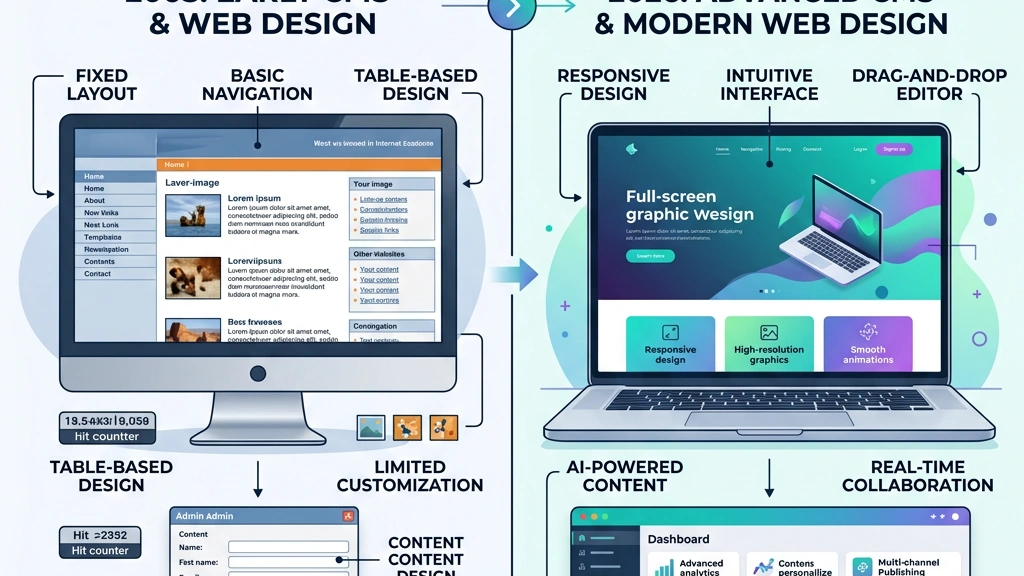
Joomla 3.0, launched in September 2012, marked a major shift toward a modern, modular architecture. It introduced the “Component,” concept, which allowed developers to build and distribute components as separate packages, fostering a richer ecosystem. The release also upgraded the core to PHP 5.3, enabling better performance and security.
Subsequent releases (3.1–3.4) followed a rapid development cycle, each adding features such as improved multilingual support, a new “Extensions Manager” UI, and enhanced database migration tools. The 3.x series also emphasized backward compatibility, ensuring that extensions built for 2.5 could be upgraded with minimal effort.
This period saw a surge in Joomla adoption, with the platform powering a wide range of websites—from blogs and portfolios to e‑commerce stores and corporate intranets. The community’s active engagement, through forums, GitHub, and local meetups, helped refine the platform and address emerging security concerns.
Joomla 3.5, released in March 2016, introduced a new “Template Style” system and the “User Groups” feature, which provided more granular control over content access. The release also began addressing the growing need for GDPR compliance, adding tools for managing user consent and data export.
Joomla 3.9, released in October 2018, built upon these foundations by offering built‑in GDPR tools, such as a “Cookie Consent” module and a “Data Export” component. It also introduced the “Joomla 3.9 Security Update” series, which fixed critical vulnerabilities and reinforced the platform’s security posture.
These releases demonstrated Joomla’s commitment to maturity, focusing on stability, compliance, and a user‑friendly extension ecosystem. The 3.x series also established a new release cadence: major releases every 12–18 months, with minor updates every 3–6 months.
From Joomla 3 onward, the platform adopted a more predictable release schedule. Major releases occur approximately every 12–18 months, while minor releases provide bug fixes and security patches. Each major release is supported for three years, with an additional year of security updates after the end of standard support. This structure gives site owners clear upgrade paths and ensures that security remains a top priority.
The introduction of the “Joomla Extension Directory” (JED) and the “Joomla Extension Development Guidelines” also standardized extension development, making it easier for developers to create compatible and secure extensions that work across multiple Joomla versions.
Joomla 4.0, released on August 17, 2021, represents a complete rewrite of the core framework. It adopts modern PHP standards (PHP 8.0+), incorporates the Symfony components, and introduces a new “Joomla 4 Component” architecture that separates core functionality from extensions. This redesign improves performance, reduces memory usage, and enhances security.
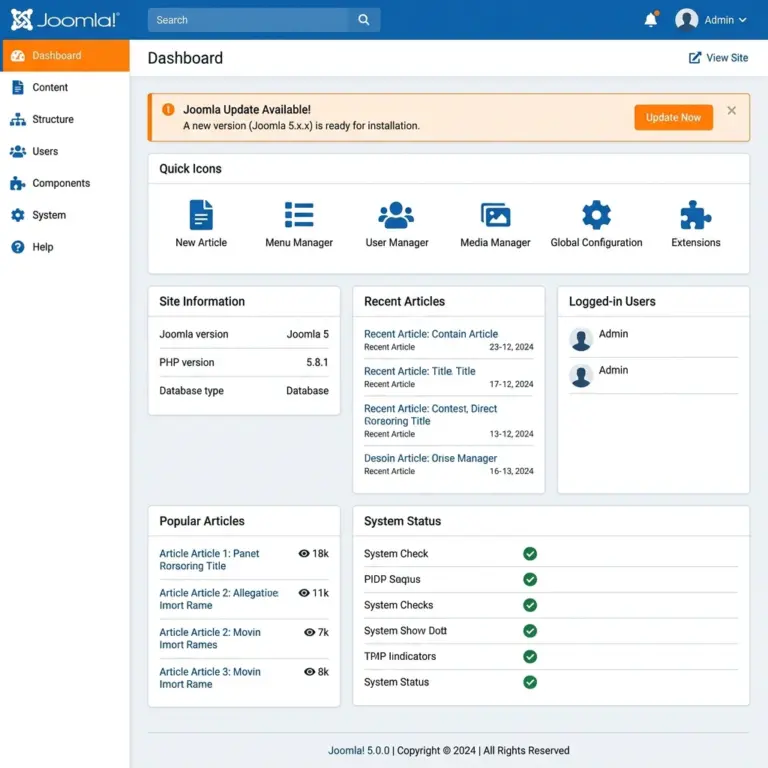
Key changes include a revamped administrative interface built with Vue.js, a new “Template Builder” that supports CSS Grid and Flexbox, and a “Site Builder” that uses a drag‑and‑drop editor. The release also introduces “Joomla 4 Extensions” that are compatible with the new architecture, ensuring a smooth transition for developers.
Joomla 4’s focus on modularity and modern web standards positions it as a future‑proof platform capable of handling complex, data‑driven websites.
Joomla 4.4, released in early 2023, served as the final minor release before the launch of Joomla 5. It addressed remaining bugs, improved compatibility with third‑party extensions, and added performance optimizations. The release also introduced the “Joomla 4.4 Security Update” series, which fixed critical vulnerabilities and reinforced the platform’s security posture.
Joomla 4.4’s release demonstrated the community’s commitment to maintaining a stable, secure foundation while preparing for the next generation of features in Joomla 5.
Migrating from Joomla 3 to Joomla 4 requires careful planning. The process typically involves:
For detailed guidance, see our article on Joomla 4 Migration: How to Upgrade from Joomla 3.
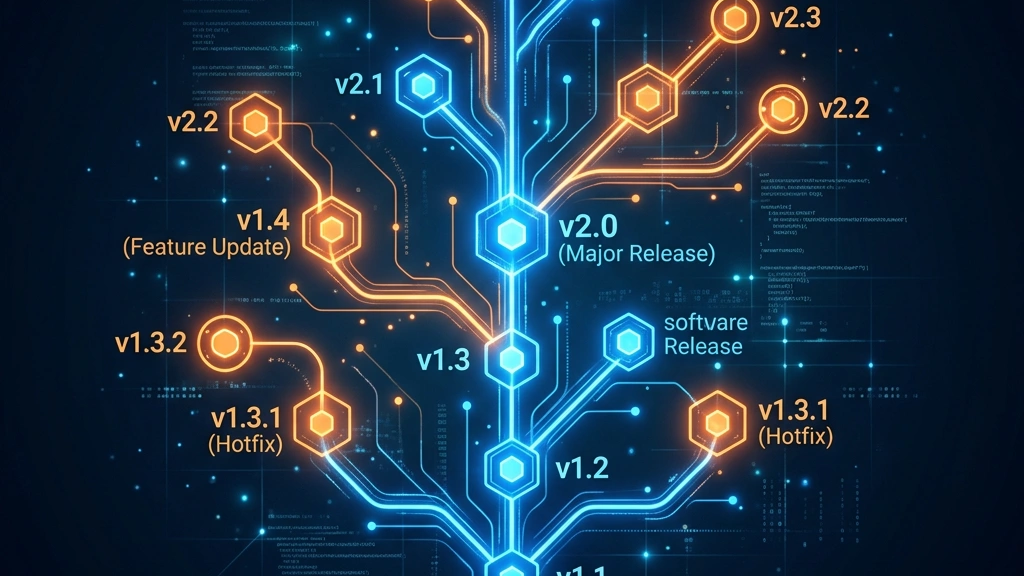
Joomla 5.0, released in October 2023, builds on the foundation of Joomla 4 with a renewed focus on performance, developer experience, and modern UI/UX. It introduces a new “Component Builder” that allows developers to generate skeleton components with minimal code, and a “Template Builder” that supports modern CSS frameworks like Tailwind CSS.
Joomla 5 also enhances the “Site Builder” with a more intuitive drag‑and‑drop system, supports WebP images natively, and improves SEO tools. The platform now requires PHP 8.1+ and incorporates the latest Symfony components, ensuring compatibility with the latest web standards. We cover these updates in detail in our guide to Joomla 5 Features: Everything New in the Latest Release.
| Feature | Joomla 4 | Joomla 5 |
|---|---|---|
| PHP Version | 8.0+ | 8.1+ |
| Component Architecture | Separate packages | Component Builder |
| Template System | CSS Grid/Flexbox | Tailwind CSS integration |
| Site Builder | Vue.js drag‑and‑drop | Enhanced UI, WebP support |
| SEO Tools | Basic | Advanced, schema markup |
| Extension Compatibility | Legacy extensions supported | New extensions only (with backward compatibility layer) |
These differences highlight Joomla 5’s emphasis on modern development practices, performance, and a richer user experience. For a deeper comparison, read our article on Joomla 4 vs Joomla 5: Should You Upgrade?.
Joomla 6.0, released in early 2025, continues the evolution toward a modular, API‑first platform. It introduces a “Headless CMS” mode, allowing developers to serve content via JSON‑API for mobile apps and single‑page applications. Joomla 6 also adopts a new “AI‑Assist” feature that uses natural language processing to generate content snippets and suggest SEO improvements.
The release targets PHP 8.2+ and includes a revamped “Extension Development Kit” (EDK) that simplifies the creation of extensions for both the traditional CMS and the headless API. Joomla 6’s focus on flexibility and AI integration positions it as a leading platform for future‑ready web experiences.
| Year | Release | Notable Features |
|---|---|---|
| 2005 | 1.0 | First official release, multilingual support |
| 2008 | 1.5 | LTS, component manager, new templating |
| 2011 | 1.6 | ACLs, improved UI, performance optimizations |
| 2011 | 1.7 | Site Builder (short‑lived) |
| 2012 | 2.5 | LTS, template management, SEO tools |
| 2012 | 3.0 | Modern architecture, component packages |
| 2016 | 3.5 | Template styles, user groups, GDPR groundwork |
| 2018 | 3.9 | GDPR tools, data export, security updates |
| 2021 | 4.0 | Complete rewrite, PHP 8, Vue.js admin |
| 2023 | 4.4 | Final minor, bug fixes, performance |
| 2023 | 5.0 | Component Builder, Tailwind CSS, headless mode |
| 2025 | 6.0 | Headless CMS, AI‑Assist, JSON‑API |
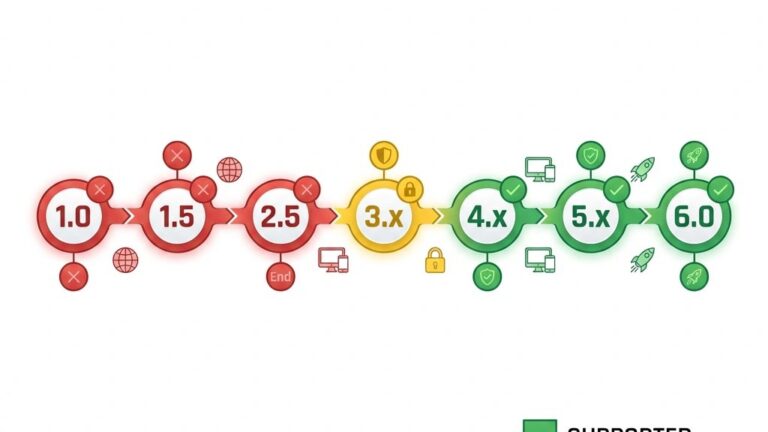
Joomla’s versioning follows a three‑segment format: Major.Minor.Patch. The major number (e.g., 3, 4, 5) indicates a significant architectural change or rewrite. The minor number reflects feature additions and improvements, while the patch number denotes bug fixes and security patches. LTS releases are marked by a “LTS” designation and receive extended support.
| Version | End of Standard Support | End of Security Updates | Recommended Upgrade Path |
|---|---|---|---|
| 1.5 | 2011 | 2012 | Upgrade to 2.5 |
| 2.5 | 2015 | 2016 | Upgrade to 3.x |
| 3.9 | 2021 | 2022 | Upgrade to 4.x |
| 4.4 | 2024 | 2025 | Upgrade to 5.x |
| 5.0 | 2026 | 2027 | Upgrade to 6.x |
| 6.0 | Ongoing | Ongoing | Maintain on 6.x |
Site owners should plan upgrades before the end of standard support to avoid security risks and ensure compatibility with new extensions. You can find the full list of patch‑level releases on the official Joomla CMS Versions page, and the latest downloads at joomla.org.
Yes, Joomla continues to power a wide range of websites worldwide, including corporate portals, government sites, e‑commerce platforms, and community forums. Its flexible architecture and strong extension ecosystem make it a viable choice for many organizations.
Joomla 5 builds on the rewrite of Joomla 4 by introducing a Component Builder, Tailwind CSS integration, a more advanced Site Builder, and a headless CMS mode. It also requires a newer PHP version (8.1+) and focuses on modern development practices.
Upgrading from Joomla 5.4 to 6 involves backing up the site, ensuring all extensions are compatible or have updates, installing the Joomla 6 installer, and testing on a staging environment before going live. Detailed steps are available in our migration guide: How to Migrate from Joomla 3 to Joomla 5.
Joomla 5.0 was released in October 2023.
For more details, check out Joomla Security: 15 Proven Tips to Protect Your Site.
Visit the Joomla Extension Directory (JED) and filter by “Joomla 6 Compatible.” You can also check the extension’s documentation or contact the developer for compatibility information.
Absolutely. Joomla remains a powerful, community‑driven CMS that offers reliable features, extensibility, and a strong security track record. Its ongoing development, including the headless CMS mode in Joomla 6, ensures it stays aligned with modern web development trends. For more insights, see Joomla CMS: Why It’s Still Relevant in 2026.