Physical Address
304 North Cardinal St.
Dorchester Center, MA 02124
Physical Address
304 North Cardinal St.
Dorchester Center, MA 02124

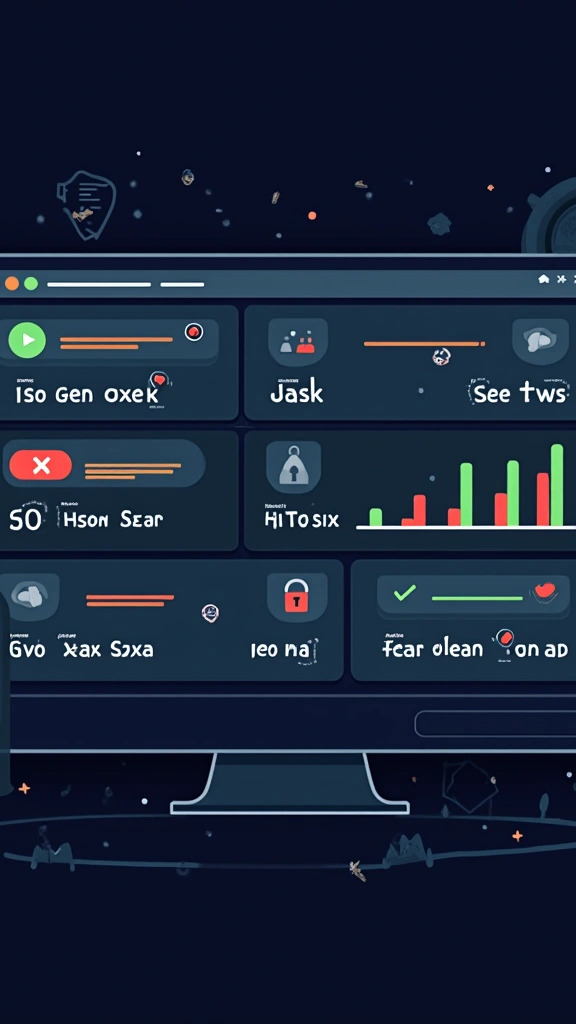


Joomla sites are targeted every day because many owners postpone or overlook basic security tasks. A single outdated extension, a weak administrator password, or an improperly configured server can open the door to automated bots that scan the internet for known vulnerabilities. By following a structured joomla security checklist, we can turn a chaotic, reactive approach into a repeatable, proactive process. In this article we walk through every layer of a Joomla installation—core files, user accounts, extensions, server settings, backups, and monitoring—providing step‑by‑step instructions, concrete examples, and practical tips that any site owner can apply. Whether you manage a small community portal or a high‑traffic corporate site, the checklist below will help you discover hidden risks, patch them quickly, and keep your Joomla installation resilient against the latest threats. For a broader overview of Joomla security best practices, see our 15 proven tips to protect your site.
Most successful attacks on Joomla sites exploit vulnerabilities that have already been disclosed and patched. Attackers use automated scanners to locate sites running an older Joomla core or an extension with a known CVE (Common Vulnerabilities and Exposures) listed on the Joomla Vulnerable Extensions List. When we fail to apply the corresponding security update, the exploit is executed in seconds, often resulting in defaced pages, stolen data, or a complete takeover of the server.
The cost of recovery far exceeds the cost of prevention. A typical breach can require hours of forensic analysis, the hiring of a security consultant, and the rebuilding of trust with users. In monetary terms, downtime, lost revenue, and potential legal penalties can easily reach thousands of dollars, whereas a regular audit takes only a few hours per month and costs virtually nothing if we already have the right tools in place.
Joomla’s architecture adds specific risks. The core is relatively lightweight, but the platform encourages the use of third‑party extensions to add functionality. Each extension introduces its own code base, database tables, and file permissions. If an extension is abandoned or contains insecure code, it becomes a backdoor for attackers, even if the core itself is up to date. Moreover, Joomla’s default file structure places the administrator and templates directories publicly accessible, which means a misconfiguration can expose sensitive files.
Because of these factors, we recommend performing a full security audit at least once a month for most sites, and weekly for high‑traffic or high‑value installations. A monthly cadence gives us enough time to review logs, test backups, and verify that all patches have been applied, while a weekly rhythm catches any sudden changes—such as a new malicious plugin that may have been uploaded via a compromised FTP account.
In addition to regular audits, we should adopt a “defense in depth” mindset: combine core updates, strong authentication, hardened server settings, and continuous monitoring. Only by addressing every layer can we achieve a truly resilient Joomla environment.
The first line of defense is to keep the Joomla core itself current. Joomla releases security patches on a predictable schedule, and each new version addresses multiple vulnerabilities that were discovered in the wild. By staying on the latest stable release, we eliminate a large attack surface before it can be exploited.
To verify the version we are running, we log into the administrator backend and go to System → System Information. The “Version” field displays the exact release number, for example 4.3.2. We then compare this number with the latest release listed on downloads.joomla.org. If the numbers differ, an update is required.
Joomla provides a built‑in update component that can fetch and install patches automatically. We should configure it to check for updates daily and send an email alert when a new version is available. This is done via Components → Joomla Update → Options. In the “Update Settings” tab we set “Update Channel” to “Release” and enable “Automatic Update” for minor releases. In the “Email Notification” tab we enter the address of the site administrator and enable “Send email on update availability”.
Before applying any update on a live site, we recommend testing it in a staging environment that mirrors the production server. This can be achieved by cloning the site’s files and database to a subdomain or a local development machine, running the update there, and verifying that all extensions and custom code continue to work. Once the test passes, we can apply the update on the live site using the one‑click “Update” button that appears in the Joomla Update component.
In Joomla 4 and the upcoming Joomla 5, the update process has been simplified, but the underlying principle remains the same: always apply security patches promptly, test in a safe environment, and keep a record of the version history for future reference.
4.2.9).
Compromised credentials are the most common entry point for attackers. Joomla ships with a default super‑user account named admin. If this account is left unchanged, automated bots can guess the username and focus on cracking the password. Even strong passwords are useless if the username is known and the account is never reviewed.
Our audit should begin by renaming the default administrator account and reducing the number of super‑users to the absolute minimum. In most cases, two super‑users are enough: one for daily administration and a backup for emergencies. Any additional accounts with “Super User” rights should be downgraded to a lower group such as “Administrator” or “Manager”.
We also need to enforce a strict password policy. Joomla’s built‑in password strength checker can be configured to require a minimum length of 12 characters, a mix of upper‑ and lower‑case letters, numbers, and special symbols. This setting is found under Users → Manage → Options in the “Component” tab. Enabling “Two‑Factor Authentication (2FA)” adds an extra layer of protection; the plugin can be activated via Extensions → Plugins and searching for “Two Factor Authentication”. Once enabled, each super‑user must set up a time‑based one‑time password (TOTP) using an app like Google Authenticator.
Inactive accounts pose a hidden risk. We should run a query in the Joomla database to list users whose last login exceeds 90 days, then either delete or disable them. The SQL command is:
SELECT id, username, lastvisitDate FROM #__users WHERE lastvisitDate < DATE_SUB(NOW(), INTERVAL 90 DAY);
After identifying dormant accounts, we either set their “Block” flag to “1” or remove them entirely, depending on the organization’s policy.
Lastly, we can restrict access to the administrator folder by IP address using an additional .htaccess file. This file should be placed inside the administrator directory and contain directives such as:
Order deny,allow
Deny from all
Allow from 203.0.113.45
Allow from 198.51.100.27
Only the listed IPs will be able to reach the backend, dramatically reducing the attack surface.
admin account to a unique username..htaccess file in the administrator directory to allow access only from trusted IP addresses.
Extensions are the lifeblood of Joomla, but they also represent the largest security liability. Studies show that more than 80 % of Joomla breaches involve a vulnerable third‑party extension. Many extensions are developed by small teams with limited security resources, and some are abandoned altogether, leaving known vulnerabilities unpatched.
Our first step is to generate a full inventory of installed extensions. In the administrator backend, we go to Extensions → Manage → Manage. The list shows the type (Component, Module, Plugin, Template), version, and status of each item. We should export this list to a CSV file for offline analysis.
Next, we cross‑reference each extension with the Joomla Extensions Directory (JED) and the developer’s official website. The JED (which we review in our best Joomla extensions roundup) provides a “Last Updated” date; any extension that has not received an update in the past 12 months should be flagged for removal or replacement. Additionally, we can search the CVE database for the extension name to see if any known vulnerabilities exist.
Removing an extension is not the same as disabling it. Even a disabled plugin leaves its files on the server, which can be accessed directly if the web server is misconfigured. Therefore, we must uninstall the extension completely via Extensions → Manage → Uninstall. After uninstalling, we should verify that the corresponding folder (e.g., plugins/content/example) has been deleted from the file system.
For extensions that we must keep, we should audit their permissions. In Joomla, each extension can request access to specific database tables and file paths. Using the “Access Control List (ACL)” settings under System → Global Configuration → Permissions, we review the groups that have “Edit” or “Configure” rights for each extension. Only trusted administrators should retain these privileges.
Finally, we should consider using a security scanner such as Admin Tools or RSFirewall! to automatically check installed extensions against a known‑good list. These tools can flag outdated files, unexpected modifications, and missing security headers.
modules/mod_example).
Incorrect file permissions are a classic cause of Joomla compromises. If the web server can write to files that should be read‑only, an attacker who gains a foothold can upload malicious scripts, modify configuration files, or replace core Joomla files with backdoors.
The recommended permission scheme for a typical Linux host is:
755 (owner can read/write/execute; group and others can read/execute).644 (owner can read/write; group and others can read).configuration.php: 444 (read‑only for everyone) after the site is live.We can apply these permissions recursively from the command line. Assuming the Joomla root is /var/www/html/joomla, the commands are:
find /var/www/html/joomla -type d -exec chmod 755 {} \\;
find /var/www/html/joomla -type f -exec chmod 644 {} \\;
chmod 444 /var/www/html/joomla/configuration.php
Beyond permissions, we must harden the .htaccess file. Joomla already ships with a default .htaccess that includes rules to prevent directory listing and block certain file types. We should add additional directives to block direct PHP execution in user‑upload folders such as /images and /tmp:
# Prevent PHP execution in upload directories
<Directory "/var/www/html/joomla/images">
            Order allow,deny
        Deny from all
    </FilesMatch>
</Directory>
# Same for the tmp folder
<Directory "/var/www/html/joomla/tmp">
Order allow,deny
Deny from all
</FilesMatch>
</Directory>
PHP configuration also plays a role. In php.ini we should set allow_url_include = Off and register_globals = Off to prevent remote file inclusion attacks. Additionally, we set display_errors = Off and error_reporting = 0 on production servers to avoid leaking stack traces to attackers.
After the site is installed, the installation directory should be removed entirely. If it remains, an attacker can rerun the installer and gain administrative access. Deleting the folder is as simple as running rm -rf /var/www/html/joomla/installation or using an FTP client.
Finally, we can add an extra layer of protection to the administrator area by placing a second .htaccess file that requires HTTP authentication. The file contains:
AuthType Basic
AuthName "Restricted Area"
AuthUserFile /path/to/.htpasswd
Require valid-user
We generate the .htpasswd file with a strong password using the htpasswd utility. This means that even if the Joomla login page is compromised, the attacker still needs the HTTP auth credentials to reach the backend.
Transport‑level security is non‑negotiable. All data exchanged between visitors and the site must be encrypted with HTTPS. Joomla can enforce HTTPS site‑wide from the Global Configuration. In the backend, go to System → Global Configuration → Server and set “Force HTTPS” to “Entire Site”. This setting automatically redirects all HTTP requests to HTTPS.
We also need to add a rewrite rule in .htaccess to ensure that any direct HTTP request is redirected before Joomla processes it. The rule looks like:
# Redirect HTTP to HTTPS
RewriteEngine On
RewriteCond %{HTTPS} off
RewriteRule ^(.*)$ https://%{HTTP_HOST}%{REQUEST_URI} [L,R=301]
Backups are the safety net that allows us to recover quickly after a breach or accidental data loss. The Akeeba Backup component is the de‑facto standard for Joomla. We cover the full backup and restore process in our Joomla backup guide. After installing Akeeba, we configure a “Schedule” to run daily at a low‑traffic hour (e.g., 02:00 AM). The backup profile should include the entire site, database, and configuration files.
Backups must never be stored on the same server as the live site. We can configure Akeeba to push the archive to Amazon S3, Dropbox, Google Drive, or a remote FTP server. In the “Remote Storage” tab we enter the credentials and test the connection. Once the backup runs, we verify the file size and download a copy to ensure it is not corrupted.
Quarterly restoration tests are essential. We spin up a fresh Joomla installation on a staging server, import the latest backup, and confirm that the site works as expected. This process validates both the backup integrity and the restoration procedure.
Monitoring complements backups. Admin Tools offers a file‑integrity scanner that hashes core files and compares them to a known‑good list. We schedule the scanner to run nightly and receive an email alert if any file changes are detected.
Log analysis helps us spot suspicious activity early. By enabling “Log Errors” in System → Global Configuration → Server and reviewing the logs/joomla_error.php file, we can identify repeated 404 errors targeting /administrator or attempts to access .env files. Tools like Fail2Ban can be configured to ban IPs that trigger multiple failed login attempts.
Finally, we should set up external uptime monitoring (e.g., UptimeRobot or Pingdom) to receive instant alerts if the site goes down. A sudden outage can be a sign of a DDoS attack or a compromised server that has been taken offline. For related server-side improvements, check our Joomla speed optimization guide.

While core Joomla settings provide a solid foundation, dedicated security extensions add layers of protection that are difficult to achieve manually. Below we outline the most effective tools and how to configure them.
Admin Tools Pro is a full-featured suite that creates a hardened .htaccess file, provides a web application firewall (WAF), and scans the file system for changes. After installing the extension, we run the “Security Checklist” wizard, which automatically applies best‑practice directives such as disabling directory listing, blocking access to .git and .svn folders, and preventing PHP execution in upload directories. The “File Scanner” module runs nightly and emails us if any core file is altered.
RSFirewall! offers similar functionality with a focus on real‑time IP blocking. In its configuration, we enable “Automatic IP Blocking” and set the threshold to three failed login attempts within five minutes. The firewall also checks the integrity of Joomla core files against the official checksum list provided by Joomla.org.
jHackGuard is a lightweight option that adds input filtering to prevent SQL injection and cross‑site scripting (XSS). It also monitors file changes and can roll back modifications to a known good state. For sites that cannot afford a paid extension, the free version of jHackGuard still provides valuable protection.
CAPTCHA on the login form is a simple yet effective deterrent against automated credential‑stuffing attacks. We enable it by going to Extensions → Plugins, searching for “CAPTCHA – reCAPTCHA”, and setting the “Default CAPTCHA” to “reCAPTCHA”. We then obtain site and secret keys from Google’s reCAPTCHA service and paste them into the plugin parameters.
At the server or CDN level, we should enable a Web Application Firewall such as Cloudflare’s “Web Application Firewall” or Sucuri’s firewall service. These services sit in front of the site and filter out malicious traffic before it reaches Joomla. They also allow us to set security headers globally:
# Security Headers
Header set X-Frame-Options "SAMEORIGIN"
Header set X-Content-Type-Options "nosniff"
Header set Referrer-Policy "no-referrer-when-downgrade"
Header set Content-Security-Policy "default-src 'self'; script-src 'self' 'unsafe-inline' https://www.google.com; object-src 'none';"
These headers mitigate clickjacking, MIME‑type sniffing, and cross‑site scripting attacks. We add them to the .htaccess file in the Joomla root.
By combining a dedicated firewall extension with server‑level protections and security headers, we create a multi‑layered defense that significantly reduces the likelihood of a successful intrusion.
We recommend a full audit at least once a month for most sites, with a lighter “quick‑check” weekly for high‑traffic or high‑value installations. The monthly audit should cover core updates, user permissions, extension reviews, file permissions, and backup verification. Weekly checks focus on log review, recent plugin updates, and any new security alerts from Joomla or third‑party vendors.
The majority of Joomla compromises stem from outdated extensions. Even when the core Joomla version is current, a vulnerable third‑party component can provide a backdoor that attackers exploit. Keeping extensions up to date, removing abandoned ones, and regularly scanning for known CVEs are the most effective preventative measures.
Yes, the core Joomla configuration, combined with free tools such as Admin Tools (free version), jHackGuard, and proper server hardening, can provide a solid security baseline. However, paid extensions often include advanced features like automated file integrity monitoring, real‑time IP blocking, and detailed firewall rules that simplify ongoing maintenance.
First, take the site offline by enabling “Maintenance Mode” in System → Global Configuration → Site. Then, create a full backup of the current files and database for forensic analysis. Scan the site with a security extension, remove any unknown files, and reset all administrator passwords and 2FA tokens. Finally, restore a clean backup from before the compromise, apply all pending updates, and conduct a post‑mortem to identify the entry point.
Security is largely a function of how the platform is maintained, not the platform itself. Joomla’s architecture, with its stricter MVC pattern and built‑in ACL, can be more resistant to certain attacks when configured correctly. Both Joomla and WordPress suffer from vulnerable extensions; the key is to keep everything up to date, use strong authentication, and apply layered defenses.
By following the detailed steps in this joomla security checklist, we can dramatically reduce the risk of a breach, protect user data, and maintain the reputation of our site. Regular audits, disciplined update practices, and the right combination of extensions and server hardening form the backbone of a resilient Joomla installation.