Physical Address
304 North Cardinal St.
Dorchester Center, MA 02124
Physical Address
304 North Cardinal St.
Dorchester Center, MA 02124

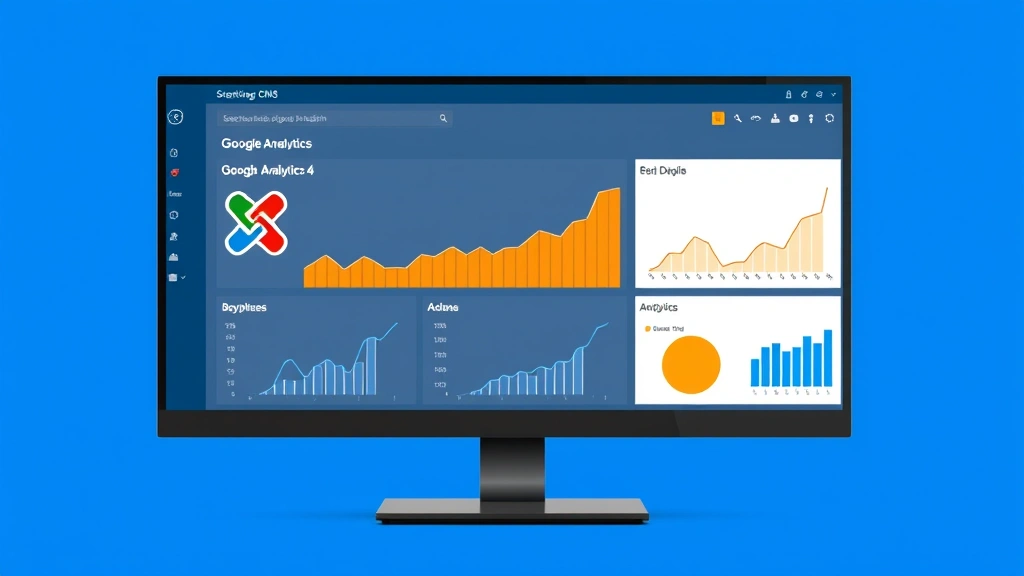
When we set up joomla google analytics on our site, we instantly gain a window into user behavior. The data we collect becomes the compass that guides every design and content decision.
Key Takeaways

We start by asking the simple question: who is visiting our site? GA4 answers this with a detailed portrait of each visitor, from the device they use to the country they call home. By examining the user acquisition reports, we can see whether organic search, social referrals, or direct traffic bring the most engaged users. This insight is like a lighthouse, steering us away from dead‑end marketing tactics and toward channels that truly resonate.
Beyond the headline numbers, GA4’s event tracking lets us capture interactions that traditional page‑view metrics miss—clicks on a download button, video plays, or form submissions. When we map these events onto the visitor flow, patterns emerge that feel like a puzzle falling into place. The more we understand how users move through our Joomla pages, the better we can tailor content to keep them longer and reduce the bounce rate.
Every article, product page, or blog post on our Joomla site has a story to tell, but not all stories are equally compelling. GA4’s page views and average session duration metrics act as a report card for each piece of content. By comparing these figures across the site, we can identify which topics act as magnets and which fall flat. Think of it as a garden: the thriving plants receive the most sunlight, while the wilted ones need pruning or a different location.
The conversion tracking feature adds another layer of depth. When we set up goals—such as newsletter sign‑ups or e‑commerce purchases—we can see which pages act as the final push toward conversion. This data-driven feedback loop allows us to prioritize high‑performing content, much like a chef focusing on the most popular dishes on a menu.
Conversions are the ultimate proof that our Joomla site is delivering value. GA4 lets us define conversion events that align with our business objectives, whether that’s a completed contact form, a download, or a purchase. By linking these events to specific traffic sources, we can pinpoint which campaigns generate the highest return on investment.
The real‑time reports are especially useful during a product launch or a promotional push. As visitors interact with the site, we see the numbers update instantly, giving us the ability to tweak messaging on the fly. This immediacy feels like having a live dashboard on a race car, where every second counts.
We begin by heading to the Google Analytics homepage and clicking “Start measuring.” The sign‑up process is straightforward: we enter our Google account, accept the terms, and click “Create.” At this stage, we are essentially planting a seed that will later grow into a rich data forest.
After the account is created, we are prompted to set up a property. This is where we tell GA4 what kind of data we want to collect. We select “Web” as the platform, give the property a descriptive name (e.g., “My Joomla Site”), and choose the appropriate time zone and currency. These settings act like the foundation of a house—if they’re off, everything built on top will be misaligned.
Once the property is in place, GA4 guides us through the creation of a data stream. We select “Web” again and enter the URL of our Joomla site. The system then generates a measurement ID that looks like G-XXXXXXXXXX. This ID is the secret handshake between our site and GA4, allowing the two to speak without interference.
In the configuration panel, we can enable IP anonymization to protect visitor privacy and toggle enhanced measurement for automatic event capture (scrolls, outbound clicks, etc.). These options are akin to adjusting the lenses on a camera—fine‑tuning what we see while respecting the subject’s privacy.
The measurement ID is displayed prominently on the data‑stream page, and we copy it to our clipboard. It is the single line of code that will later be embedded in our Joomla template or a custom HTML module. Think of it as the key that unlocks the gate to our analytics garden.
For those who prefer a more centralized approach, we can also set up Google Tag Manager (GTM) and create a GA4 tag that references the same measurement ID. GTM offers a flexible way to manage multiple tags without editing the code directly. The following external link provides a quick reference: Google Tag Manager Docs.
| Step | Action | Result |
|——|——–|——–|
| 1 | Create GA4 account | Access to Google Analytics dashboard |
| 2 | Add a Web property | Dedicated property for Joomla site |
| 3 | Set up a data stream | Generates measurement ID |
| 4 | Enable IP anonymization | Improves privacy compliance |
| 5 | Copy measurement ID | Ready for insertion into Joomla |
We start by logging into the Joomla administrator panel and heading to Extensions → Templates → Templates. From the list, we select the active template—often named “protostar” or a custom design—and click “Edit.” This opens the file manager where we can locate index.php, the backbone of every page rendered by Joomla.
If the site uses a child template or overrides, we make sure we are editing the correct index.php that outputs the section. Editing the wrong file would be like painting a portrait on a wall that no one ever sees—our tracking code would remain invisible to visitors and to GA4.
Within index.php, we scroll to the closing tag. Just before this tag, we paste the GA4 tracking code snippet that Google provides. The snippet looks like this:
We replace G-XXXXXXXXXX with our actual measurement ID. The anonymize_ip flag ensures we respect visitor privacy, a small but vital detail that keeps us on the right side of regulations. After saving the file, the tracking code is now part of every page’s section, ready to fire whenever a visitor loads a page.
Testing is the final, essential step. We open a new incognito window and go to our Joomla site, then check the real‑time reports in GA4. If the page view appears instantly, the code is functioning correctly. For a more granular check, we can use the Google Tag Assistant Chrome extension, which highlights any errors in the tag deployment.
If we notice that no data is arriving, we double‑check that the measurement ID matches exactly and that the script is placed before the closing tag. Common pitfalls include missing the async attribute or having duplicate tags, which can cause data to be filtered out. A systematic approach to testing ensures that our analytics foundation is solid before we move on to deeper insights.

After completing the manual template method, you may also want to explore other Joomla‑specific resources that complement our analytics setup:
These links provide additional context on how analytics data can inform SEO, performance, and security strategies across our Joomla ecosystem.
We often start with the simplest route: a custom HTML module that injects the GA4 snippet into the site’s head. First, we create a new module from the Joomla administrator, select Custom HTML, and paste the script that Google gave us when we created the property. The module should be assigned to the position‑head (or any position that appears in the of every page) and set to All Pages so the code runs everywhere.
Because the module lives outside the template files, we can change the tracking ID later without touching the theme. This flexibility is handy when we move the site to a new domain or switch to a different GA4 property. After saving, we clear the Joomla cache and verify that the script appears in the page source.
If we want to keep the site tidy, we can enable the “Prepare Content” option and wrap the script in a tag that is marked as “No HTML5” to avoid Joomla’s editor stripping it out. This method works on any Joomla version that supports modules, making it a reliable fallback when extensions are not an option.
| Extension | Free / Paid | Main Features | Pros | Cons |
|-----------|-------------|---------------|------|------|
| Google Analytics by JoomlaWorks | Free | Auto‑injects GA4 code, supports multiple IDs, basic event tracking | No coding required, updates automatically | Limited to page‑view tracking |
| System – Google Analytics (Regular Labs) | Free | Adds script via plugin, offers IP anonymization toggle | Small footprint, easy to enable/disable | No built‑in event support |
| J4GA – Google Analytics 4 for Joomla 4 | Paid | Full GA4 integration, event builder, real‑time preview | Deep integration, supports e‑commerce | Requires purchase, occasional updates |
| Matomo (self‑hosted) | Free / Paid | Alternative to GA, privacy‑focused, built‑in consent manager | Full data ownership, GDPR‑friendly | More complex setup |
We examined each extension against a checklist that includes debug mode, Tag Assistant compatibility, and the ability to add custom HTML for extra events. The JoomlaWorks plugin shines for quick deployments, while J4GA gives us granular control over event tracking and goals. Regular Labs’ plugin is lightweight and respects IP anonymization, which is a plus for sites that need to stay on the safe side of privacy regulations.
When we compare the extensions, we also look at community support and update frequency. An extension that receives regular patches is less likely to break after a Joomla core update. We also verify that the extension does not interfere with other system plugins, especially those that manipulate the output buffer.
Our decision matrix starts with the level of technical comfort on the team. If we have a developer who can edit modules, the custom HTML approach gives us full control and the ability to add custom events without extra plugins. For non‑technical editors, a ready‑made extension reduces the risk of accidental code removal.
We also weigh performance considerations. A single script tag inserted by a module adds virtually no overhead, while some extensions load additional JavaScript libraries that can increase page weight. In high‑traffic environments, the lighter option may improve load times and keep real‑time reports snappy.
Finally, we factor in compliance requirements. Extensions that offer built‑in cookie consent toggles help us stay within GDPR compliance without writing extra code. If we already have a consent manager, we may prefer the module method and simply fire the GA4 script after the user gives permission. In short, the right choice balances ease of use, performance, and privacy safeguards.
We begin by creating a GTM container in the Google Tag Manager interface and selecting Web as the platform. After the container is generated, Google provides us with a pair of snippets: one for the and one for the . We place the head snippet in a custom HTML module (as described earlier) and the body snippet in a Custom HTML module that is positioned just after the opening tag.
Next, we publish the container and return to Joomla to enable the Tag Assistant Chrome extension. This tool lets us confirm that the GTM container loads correctly and that the debug mode shows the expected tags firing on each page. If the container fails to load, we double‑check that the module is assigned to the correct pages and that no caching plugin is stripping the script.
The advantage of GTM is that we can add, modify, or remove tracking tags without touching the Joomla code again. For example, to add a new event tracking tag for a download button, we simply create a new tag inside GTM, set the trigger to “Click – All Elements,” and publish. The change propagates instantly across the site.
Within GTM we define event tags that send data to GA4 whenever a user interacts with a specific element. For a Joomla contact form, we set a trigger that fires on the form’s submit button, then configure the GA4 event with parameters such as event_category: form, event_action: submit, and event_label: contact. These parameters appear in GA4’s event report and can be used to build goals that count successful submissions.
We also map conversions in GA4 by marking the relevant events as conversions in the GA4 UI. Once a conversion is defined, GA4 automatically aggregates the data, allowing us to see which pages or traffic sources drive the most valuable actions. For e‑commerce sites, we can push purchase events from Joomla extensions that handle shopping carts, feeding revenue data directly into GA4’s e‑commerce reports.
To keep the data clean, we enable IP anonymization in the GA4 tag settings inside GTM. This masks the last octet of the visitor’s IP address, satisfying many privacy regulations. We also adjust the data retention period in GA4 to match our organization’s policy, typically setting it to 14 months for most marketing purposes.
“Tag Manager gives you the power to manage all your analytics and marketing tags from a single place, without touching the site’s code.” – Google

When we work with European visitors, we must respect cookie consent mechanisms before firing any analytics tags. GTM can be configured to listen for a consent event from a third‑party consent manager; once the user accepts, GTM triggers the GA4 tag. This approach prevents the script from loading prematurely and keeps us aligned with GDPR compliance.
We also verify that the GTM container does not set any first‑party cookies before consent. The container’s built‑in consent mode lets us pause tag execution until the user’s choice is known. If a site uses a Joomla extension for consent, we map the extension’s JavaScript events to GTM’s data layer, ensuring smooth communication between the two systems.
Finally, we document the privacy policy updates that explain how we use Google Analytics, the purpose of data collection, and the options users have to opt out. Transparency builds trust and reduces the risk of complaints from regulators.

We open the site in a browser, activate the Tag Assistant extension, and look for the GA4 tag firing in real time. The real‑time reports in GA4 should also show at least one active user within a few seconds of loading the page. If the tag does not appear, we double‑check that the script is present in the page source and that no caching plugin is blocking it.
Yes, GA4 works with Joomla 3.x as long as we can insert the script into the page head. The custom HTML module method works across all supported Joomla versions, and most GA extensions still support Joomla 3. If we run a very old Joomla release, we may need to upgrade the core or use a third‑party extension that injects the code via a system plugin.
A manual insertion gives us direct control over the script placement and lets us add custom events without extra layers. Extensions, on the other hand, handle the insertion automatically, often providing a UI for multiple tracking IDs, IP anonymization, and basic event tracking. Extensions can also bundle cookie consent features, which can save time for sites that need to stay within privacy regulations.
If we serve visitors from the European Economic Area, we must obtain consent before storing analytics cookies. This can be achieved with a Joomla consent extension that triggers the GA4 tag only after the user accepts. GTM’s consent mode also supports this workflow, pausing the tag until the consent signal is received.
We create a trigger in Google Tag Manager that listens for the form’s submit button click. The trigger fires a GA4 event tag that includes relevant parameters (e.g., event_category: form, event_action: submit). In GA4 we then mark this event as a goal or conversion, allowing us to see how many users complete the form.
Common reasons include the script being blocked by a caching or security plugin, the tag not firing because of missing consent, or the tracking ID being typed incorrectly. We should inspect the page source for the GA4 snippet, use Tag Assistant to confirm the tag fires, and check the debug mode in GTM for any errors. If the site uses a CDN, we may need to purge the cache after adding the script.
By following the steps outlined above, we can equip any Joomla website with a solid analytics foundation. Whether we prefer a lightweight custom HTML module, a feature‑rich Joomla extension, or the flexibility of Google Tag Manager, the tools are at our fingertips. With proper event tracking, goals, and privacy safeguards in place, we gain the insights needed to refine our content, improve user experience, and drive meaningful conversions.
For deeper guidance on GTM, see the official documentation at Google Tag Manager Developers.