Physical Address
304 North Cardinal St.
Dorchester Center, MA 02124
Physical Address
304 North Cardinal St.
Dorchester Center, MA 02124





We began our journey with Joomla back in 2005, when the project emerged from the merger of two earlier PHP‑based systems, Mambo and PHPNuke. Over the past two decades, the Joomla community has steadily added features, refined the code base, and kept the platform compatible with modern web standards. Our early versions relied on a simple procedural architecture, but as the demand for more complex sites grew, the developers introduced a model‑view‑controller (MVC) pattern that still underpins the current release. The evolution from Joomla 1.5 through Joomla 3.x and now Joomla 5 demonstrates a commitment to staying relevant while honoring the open source roots that attracted developers worldwide.
During the 2010s, Joomla positioned itself as a middle ground between the simplicity of early website builders and the flexibility of enterprise‑grade systems. The platform attracted a vibrant community of contributors who built thousands of extensions, templates, and language packs. This collaborative spirit helped Joomla survive the rise of competing content management systems and maintain a strong presence in the market. Today, the Joomla project continues to release regular updates, security patches, and feature enhancements, ensuring that our Joomla cms installation remains secure and performant.
We notice several structural differences when we compare Joomla to other popular content management systems. First, Joomla’s core includes a built‑in admin panel that offers a clear separation between content creation and site configuration. Unlike some platforms that rely heavily on third‑party plugins for basic functionality, Joomla ships with a robust set of tools for managing users, defining access levels, and configuring multilingual sites out of the box. This reduces the need for additional extensions and simplifies maintenance.
Second, the MVC architecture in Joomla encourages developers to separate business logic from presentation. This design choice leads to cleaner code, easier debugging, and more predictable upgrades. While other systems may use a monolithic approach, Joomla’s modular structure allows us to replace or extend individual components without affecting the whole site. The result is a platform that can grow with a project, from a simple blog to a complex e‑commerce portal.
Third, Joomla’s licensing model remains fully open source under the GNU GPL v2. This means we can download, modify, and redistribute the software without paying licensing fees. The open source nature also encourages a global community to contribute security patches, new extensions, and documentation. As a result, Joomla stays up‑to‑date with the latest PHP and MySQL versions, ensuring compatibility with modern web development practices.
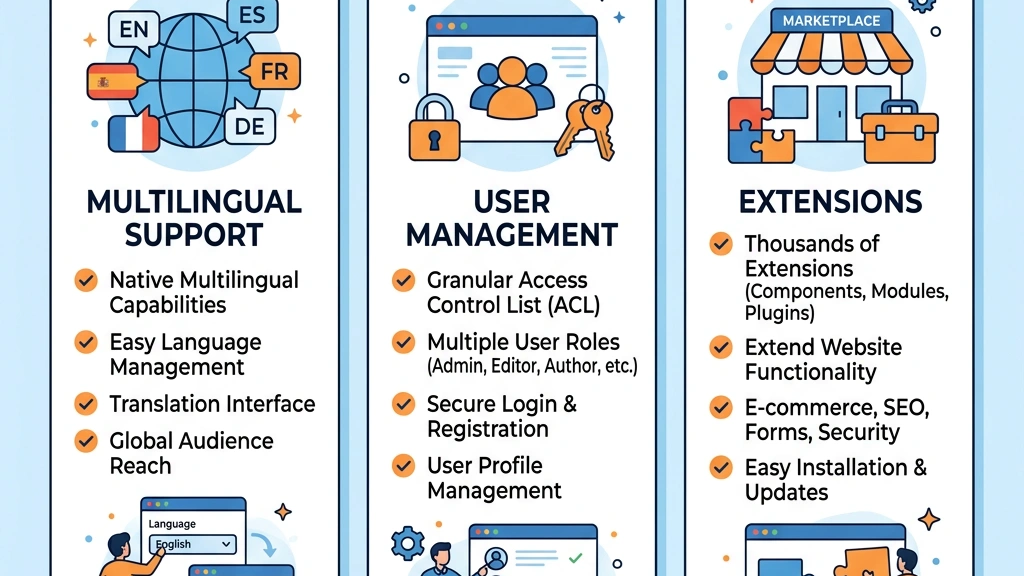
We appreciate that Joomla’s core includes native multilingual capabilities, which eliminates the need for separate translation extensions. The language manager lets us create content in multiple languages — and if you need a step-by-step walkthrough, our guide on how to create a Joomla multilingual website covers the entire process, assign language filters, and configure menu items for each locale. This built‑in approach simplifies the workflow for sites that target international audiences, such as tourism boards or multinational corporations.
The multilingual system also integrates with the SEO tools, allowing us to generate language‑specific meta tags, URL structures, and hreflang attributes automatically. By handling these details at the core level, Joomla reduces the risk of duplicate content and improves search engine visibility across regions. Additionally, the language packs are maintained by the community, ensuring that the latest translations are available for the most recent Joomla release.
When we need to add a new language, the process involves downloading the appropriate language pack, enabling it in the language manager, and assigning it to the relevant content items. This workflow is straightforward and does not require any custom code. As a result, we can launch multilingual sites quickly and keep them up‑to‑date with minimal effort.
We rely on Joomla’s sophisticated user management system to handle a wide range of roles, from anonymous visitors to privileged administrators. The platform provides built‑in groups, access levels, and permission settings that can be tailored to any organization’s hierarchy. For example, a news portal can define separate groups for editors, contributors, and reviewers, each with distinct rights to create, edit, or publish articles. We cover the full setup in our Joomla user management guide.
The access control list (ACL) in Joomla allows us to set granular permissions on individual components, modules, and menu items. This level of control is essential for sites that host user‑generated content, membership areas, or restricted documentation. By configuring the ACL, we ensure that only authorized users can view or modify sensitive data, which enhances both security and compliance.
Moreover, Joomla supports integration with external authentication providers, such as LDAP, OAuth, and SAML. This flexibility enables us to connect the CMS to corporate directories or social login services, providing a seamless sign‑in experience for end users. The combination of native ACL and external authentication makes Joomla a strong candidate for enterprise‑level web development projects.
We benefit from Joomla’s native content workflow engine, which guides articles through stages such as drafting, reviewing, and publishing. The workflow can be customized to match editorial processes, allowing us to assign specific users to each step and enforce approval rules. This feature reduces the reliance on third‑party extensions for editorial control and keeps the publishing pipeline transparent.
Custom fields are another powerful element that Joomla introduced in recent versions. We can attach additional data points to articles, users, or categories without writing custom database tables. For instance, a real‑estate site can add fields for property size, price, and location, while a conference website can store speaker bios and session times. These fields are displayed using the built‑in form rendering engine, which respects the site’s template and styling.
The combination of workflow and custom fields enables us to build sophisticated content structures that adapt to various industries. Whether we are creating a blog, a knowledge base, or a product catalog, Joomla provides the tools to organize and present information in a consistent, searchable manner.

We have observed significant performance gains in Joomla 5, thanks to a series of architectural refinements. The core now embraces PHP 8.2 features, such as attributes and JIT compilation, which reduce execution time for common operations. Additionally, the database layer has been optimized for MySQL 8, leveraging native JSON support and improved indexing strategies.
The new caching system offers finer control over page, module, and fragment caching, allowing us to balance speed with freshness. By enabling server‑side rendering of frequently accessed content, Joomla 5 can serve pages in under a second even under heavy traffic. This speed advantage is critical for SEO, as search engines favor fast‑loading sites.
Furthermore, Joomla 5 introduces a modular loading mechanism that loads only the necessary components for each request. This approach minimizes memory usage and improves scalability, making the platform suitable for both small blogs and large corporate portals. The modern architecture also prepares Joomla for future integration with emerging technologies such as headless APIs and micro‑services.
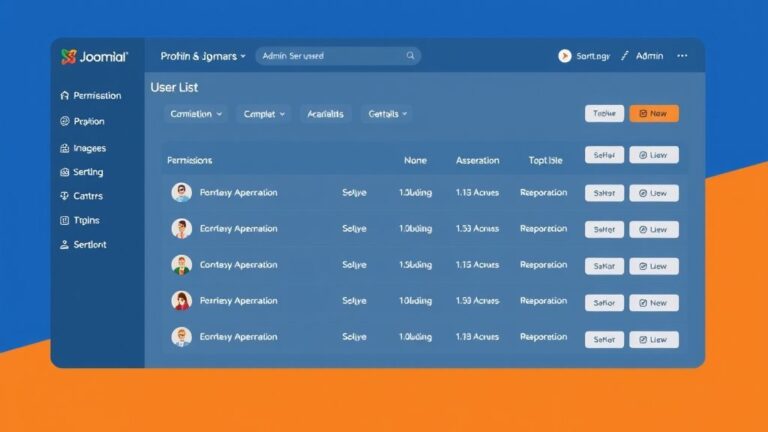
We appreciate the refreshed admin panel in Joomla 5, which adopts a cleaner visual language and a more intuitive navigation scheme. The dashboard — which we explore in depth in our Joomla admin panel guide — now presents key metrics—such as visitor counts, recent articles, and pending approvals—at a glance, helping administrators stay informed without digging through multiple screens.
The menu system has been reorganized to group related items together, reducing the learning curve for new users. Contextual help panels appear alongside form fields, offering guidance on configuration options and best practices. This design philosophy aligns with our goal of making site management accessible to non‑technical editors while still providing depth for power users.
In addition, the new admin panel supports dark mode, responsive layouts, and keyboard shortcuts for common actions. These enhancements improve productivity for teams that spend many hours in the backend, and they reflect Joomla’s commitment to a user‑friendly experience.
We place a high priority on security, and Joomla 5 introduces several measures to protect sites from common threats. The platform now includes a built‑in two‑factor authentication (2FA) module that supports TOTP apps, hardware tokens, and email verification. Enabling 2FA for privileged accounts dramatically reduces the risk of credential theft.
The core also implements stricter input validation and output escaping, mitigating cross‑site scripting (XSS) and SQL injection vulnerabilities. Regular security patches are released on a predictable schedule, and the update system can automatically apply critical fixes without manual intervention.
Moreover, Joomla 5 integrates with the latest Content Security Policy (CSP) standards, allowing us to define trusted sources for scripts, styles, and media. By configuring CSP headers, we can prevent malicious code execution and enhance the overall security posture of the website. These features make Joomla a reliable choice for sites that handle sensitive data, such as e‑commerce stores or membership portals.

We find that small businesses benefit from Joomla’s balance of simplicity and extensibility. The platform provides a ready‑made website builder experience through its core extensions, allowing owners to create landing pages, service listings, and contact forms without extensive coding. At the same time, the availability of professional templates and extensions means that a corporate brand can be represented with a polished, custom design.
Corporate sites often require multilingual capabilities, role‑based access, and integration with external systems such as CRM or ERP. Joomla’s native features cover these needs, and the open source license eliminates licensing costs that can strain a budget. By leveraging Joomla’s built‑in SEO tools, businesses can improve their online visibility and attract more customers.
We have built numerous community portals using Joomla, ranging from hobbyist forums to professional associations. The platform’s user management and ACL features enable us to create tiered membership levels, private discussion boards, and event calendars. Extensions such as community building tools, forums, and social networking modules further enrich the user experience.
Multilingual support is especially valuable for global communities, as it allows members to interact in their preferred language while preserving a unified site structure. The workflow engine helps moderators review user‑generated content before it goes live, maintaining quality and compliance with community guidelines. Joomla’s flexibility makes it a solid foundation for any organization that relies on member interaction.
We recognize that e‑commerce demands a reliable checkout process, inventory management, and payment gateway integration. Joomla’s ecosystem includes mature e‑commerce extensions that provide these capabilities while staying tightly coupled with the core CMS. These extensions support popular payment providers, shipping calculators, and tax rules, enabling us to launch online stores quickly.
The platform’s SEO features, such as friendly URLs and meta tag management, help product pages rank well in search results. Additionally, custom fields allow us to showcase product specifications, reviews, and related items without custom development. By combining Joomla’s core strengths with specialized e‑commerce extensions, we can deliver robust shopping experiences that scale with demand.
We rely heavily on the Joomla Extension Directory (JED) when we need to add functionality beyond the core. The directory hosts thousands of free and commercial extensions covering categories such as SEO, security, forms, galleries, and analytics — we have picked the top ones in our best Joomla extensions roundup. Each extension follows Joomla’s MVC standards, ensuring compatibility with the latest core updates.
When selecting an extension, we evaluate factors like developer reputation, update frequency, and user reviews. The JED also provides a rating system that helps us identify reliable solutions. Because the extensions are packaged as zip files, installation is straightforward through the admin panel’s extension manager.
The availability of extensions for niche requirements—such as event ticketing, subscription management, or API integration—means we can tailor a Joomla site to virtually any business model without writing custom code. This modular approach keeps the core lightweight while still delivering rich functionality.
We understand that a well‑designed template is essential for a professional online presence. Joomla’s template system separates layout, styling, and logic, allowing designers to create responsive, mobile‑first experiences. Templates can be purchased from third‑party marketplaces or built in‑house using modern HTML5, CSS3, and JavaScript frameworks.
When evaluating a template, we consider its compatibility with Joomla 5, the inclusion of built‑in Bootstrap support, and the flexibility of its layout options. Many templates come with multiple color schemes, typography settings, and widget areas, enabling us to customize the look without editing code. The template’s documentation also plays a crucial role in a implementation.
By combining a high‑quality template with the appropriate extensions, we can assemble a fully functional website in a fraction of the time required for a scratch‑built solution. This approach aligns with our goal of delivering value quickly while maintaining control over the site’s performance and security.
We take advantage of Joomla’s native SEO configuration to improve search engine rankings. The core offers options for creating search‑engine‑friendly URLs, setting meta descriptions, and defining canonical links. These settings are accessible directly from the article editor, ensuring that each piece of content can be optimized individually.
The platform also supports automatic generation of XML sitemaps, which we can submit to major search engines. By configuring the sitemap to include multilingual URLs and priority levels, we help crawlers understand the site’s structure and index pages efficiently. Additionally, Joomla’s built‑in schema markup support allows us to embed structured data for articles, products, and events.
These built‑in capabilities reduce the need for external plugins for basic SEO tasks, while still offering the flexibility to extend functionality through specialized extensions when required.
We often supplement Joomla’s core SEO tools with third‑party extensions that provide advanced features such as keyword analysis, content scoring, and automated linking. Popular extensions include those we reviewed in our Joomla SEO plugins comparison, each offering a dashboard that aggregates performance metrics and recommendations.
These extensions can integrate with Google Analytics, Search Console, and social media platforms, giving us a comprehensive view of traffic and engagement. Some also support schema generation for rich snippets, which can enhance click‑through rates in search results. By combining core settings with specialized extensions, we create a robust SEO strategy tailored to the site’s goals.
We often encounter the claim that Joomla has faded from relevance, but the data tells a different story. The platform continues to receive regular releases, security updates, and community contributions. Joomla 5, released in 2025, showcases a modern code base, performance enhancements, and a refreshed admin experience that rivals newer competitors.
The active developer community maintains a steady stream of extensions and templates, and many Fortune 500 companies still rely on Joomla for their intranets and public portals. Moreover, the open source nature ensures that the project can evolve without being tied to a single corporate roadmap. These factors demonstrate that Joomla remains a viable choice for a wide range of web projects.
We understand that newcomers may feel intimidated by Joomla’s feature set, but the learning curve is manageable with the right resources. The official documentation provides step‑by‑step guides for installing the CMS, configuring multilingual sites, and managing users. Community forums, video tutorials, and local user groups also offer support for beginners.
The admin panel’s recent redesign emphasizes clarity and accessibility, making it easier for editors to create and publish content. By starting with a simple template and gradually exploring extensions, users can build confidence before tackling more complex workflows. In our experience, the investment in learning Joomla pays off in the flexibility and control it provides.
We define Joomla cms as an open source content management system built on PHP and MySQL that enables developers and site owners to create, organize, and publish web content. It offers a modular architecture, multilingual support, and a powerful admin panel that together provide a flexible foundation for websites ranging from blogs to enterprise portals.
We can confirm that a vibrant global community continues to use Joomla for a variety of projects. From small business sites to large corporate intranets, Joomla powers thousands of active installations worldwide. The platform’s regular updates and active extension marketplace ensure that it remains a practical choice for modern web development.
We emphasize that Joomla is free to download, install, and modify under the GNU GPL v2 license. While the core CMS does not require any payment, some premium extensions, templates, or professional support services may be offered for a fee. However, there are also many high‑quality free extensions available in the Joomla Extension Directory.
We recognize that “better” depends on the specific needs of a project. Joomla excels in scenarios that demand advanced user management, multilingual capabilities, and fine‑grained access control out of the box. WordPress, on the other hand, is known for its ease of use and extensive blogging ecosystem. Both platforms are open source and have large communities; the choice should be based on the functional requirements and technical preferences of the development team.
We have built a wide spectrum of sites using Joomla, including corporate websites, e‑commerce stores, community portals, educational platforms, and multilingual blogs. The combination of core features—such as custom fields, workflow, and SEO tools—along with a rich extension marketplace, allows us to tailor Joomla to virtually any industry or business model.